

Loading...
Loading...
Loading...


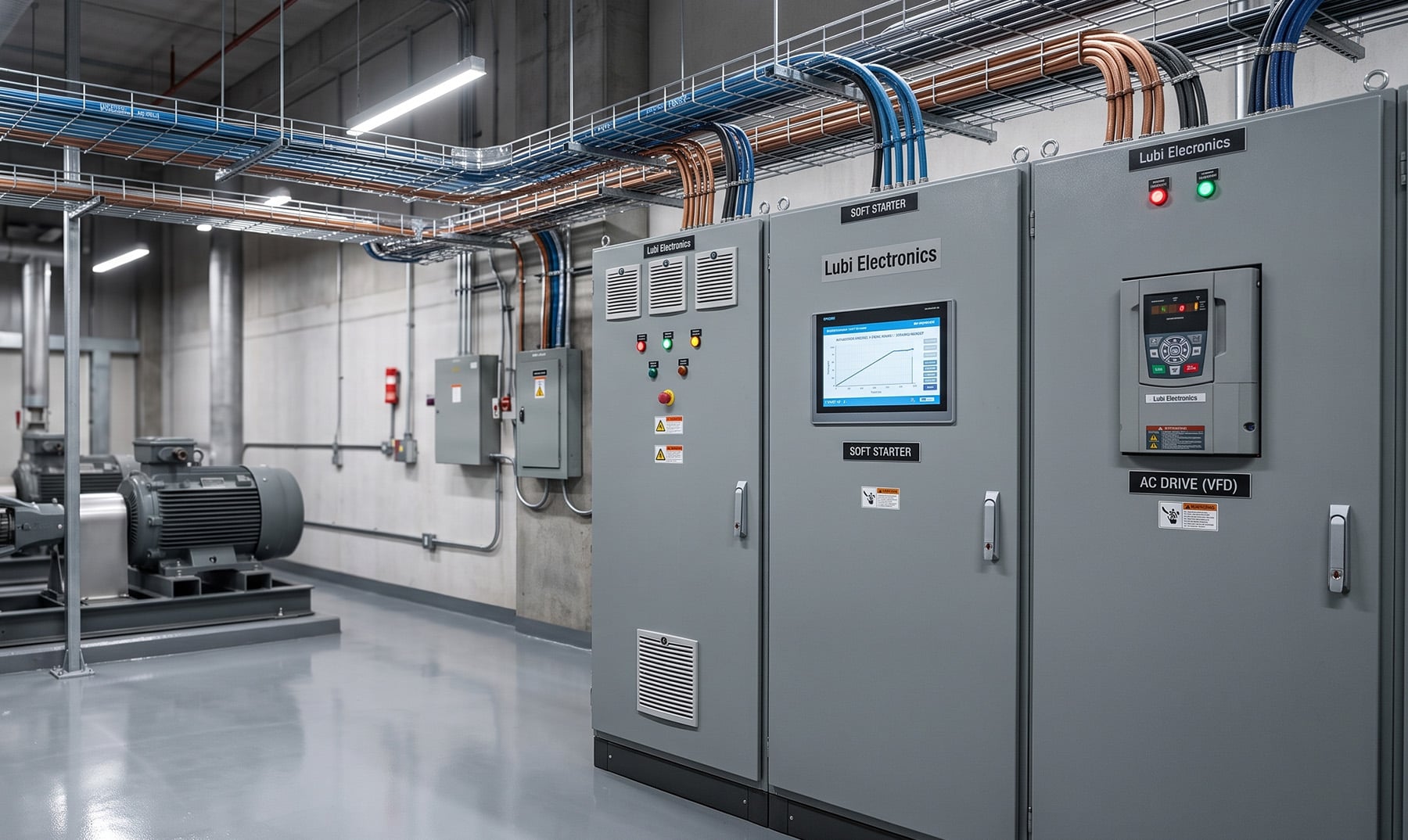
Industrial motors are responsible for driving pumps, fans, compressors, conveyors and several other critical machines. While selecting a motor control solution, one common question is whether to use an AC Drive (VFD) or a Soft Starter.
Both technologies provide controlled motor operation, but they solve different problems.
An AC drive controls both the speed and torque of a motor, whereas a soft starter primarily manages the starting and stopping process. Understanding this difference helps industries select a solution according to their actual process requirements instead of choosing a technology with capabilities that may not be required.
What is a Soft Starter?
A soft starter is a motor starting device that gradually increases the voltage supplied to an AC motor during acceleration. This allows the motor to reach its operating speed progressively rather than receiving full voltage immediately.
During direct on line starting, a motor can draw a high starting current and produce a sudden torque response. This can place additional stress on the electrical network and mechanical components connected to the motor.
A LV Soft Starter is generally used for low voltage motor applications, while an MV Soft Starter is designed for medium voltage motors used in larger industrial installations.
Lubi offers LV and MV soft starter solutions for applications where controlled starting and stopping are required, including medium voltage systems from 3.3 kV to 11 kV.
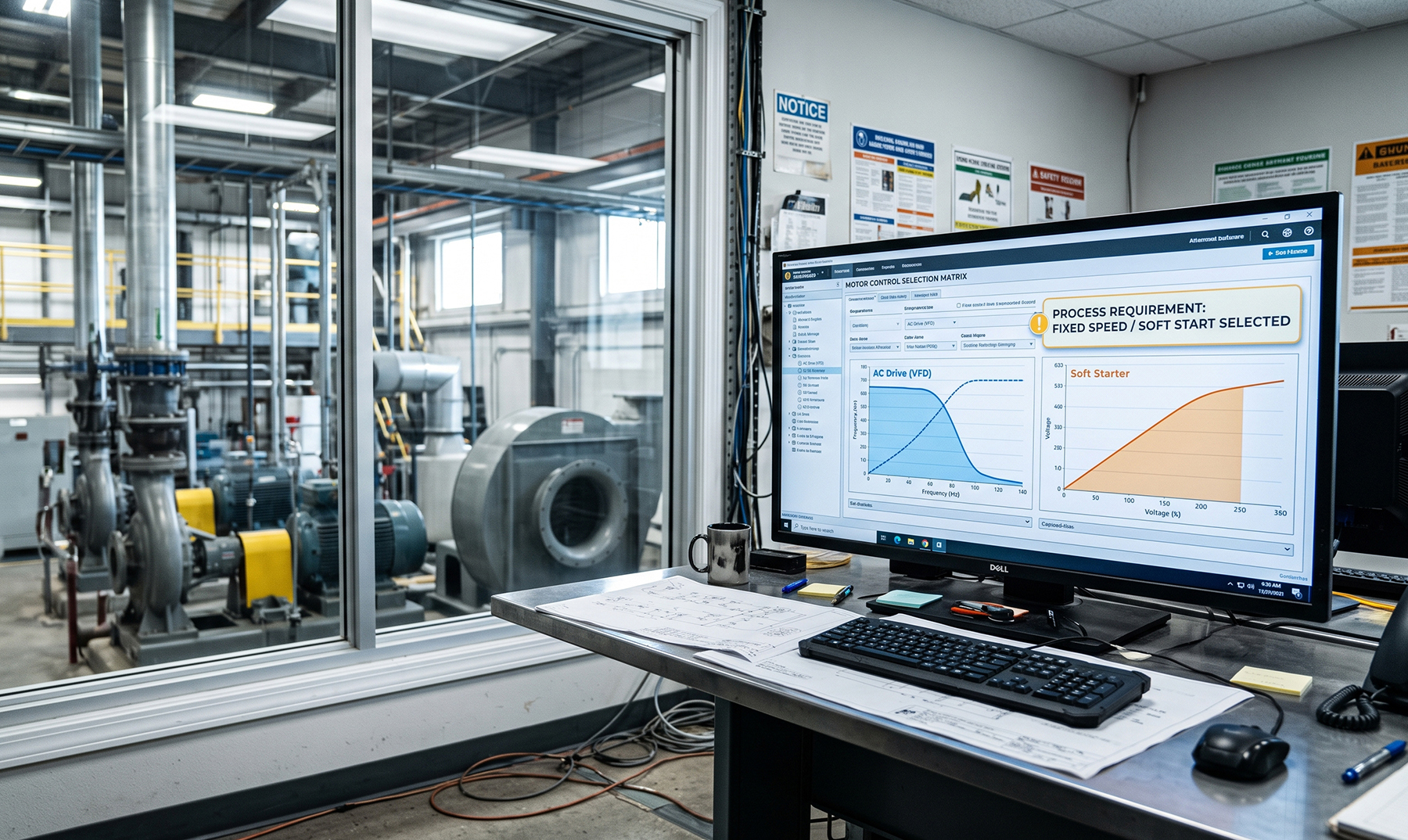
AC Drive vs Soft Starter: What is the Difference?
The primary difference comes down to speed control.
An AC Drive, also known as a Variable Frequency Drive or VFD, changes the frequency and voltage supplied to the motor. This allows the motor speed to be adjusted according to process requirements. It can therefore be useful where flow, pressure, production rate or machine speed needs to change during operation.
A soft starter works differently. It controls the motor voltage during acceleration and deceleration but does not provide continuous variable speed control. Once the motor reaches its normal operating condition, it generally runs at its rated speed.
| Feature | AC Drive / VFD | LV Soft Starter | MV Soft Starter |
|---|---|---|---|
| Motor speed control | Yes | No | No |
| Controlled starting | Yes | Yes | Yes |
| Controlled stopping | Yes | Yes | Yes |
| Variable frequency operation | Yes | No | No |
| Starting current reduction | Yes | Yes | Yes |
| Fixed speed applications | Suitable | Highly suitable | Highly suitable |
| Variable speed applications | Highly suitable | Not suitable | Not suitable |
| Typical voltage | Low voltage | Low voltage | 3.3 kV to 11 kV |
The choice therefore depends largely on what the motor needs to do after starting.
Why Do Industries Need Soft Starters?
For many industrial machines, speed variation is not part of the process. The motor simply needs to start smoothly, reach its operating speed and continue running.
In such situations, using a VFD purely for starting control may introduce capabilities that the application does not require.
A soft starter can provide a controlled acceleration profile, helping reduce sudden torque and mechanical shock. This can be particularly valuable in systems containing pumps, fans, blowers, compressors and conveyors.
For pumping systems, controlled starting and stopping can also help minimize sudden changes in pressure and flow.
The benefits become increasingly relevant when motors are started frequently or when large motors are connected to equipment that is sensitive to sudden mechanical loads.
When Should You Prefer a Soft Starter Over a VFD?
The selection becomes relatively straightforward when the process requirements are clearly defined.
If variable motor speed is required, an AC Drive is generally the appropriate choice.
For example, a production line may require a conveyor to operate at different speeds depending on the production rate. A VFD can continuously adjust motor speed to match the process.
On the other hand, consider a pump that normally operates at a fixed speed. If the main concern is high starting current, mechanical shock or pressure transients during startup, a soft starter can provide controlled acceleration without requiring continuous speed control.
The same principle applies to many industrial fans, blowers and compressors.
Therefore, the question should not simply be "Which technology is better?" The more useful question is "What does the application actually require?"
LV Soft Starter Applications
LV soft starters are commonly considered for low voltage motors used across manufacturing and industrial facilities.
Typical applications include:
They are particularly useful where motors need smoother acceleration while continuing to operate at a fixed speed.
MV Soft Starter Applications
Medium voltage motors can have considerably higher power ratings, making controlled starting an important consideration for many industrial plants.
MV Soft Starters can be used with large fixed speed motors in applications such as pumps, compressors, fans and blowers.
Industries including cement, mining, steel, power, oil and gas and water infrastructure may have large motor driven equipment where controlled starting can help reduce electrical and mechanical stress.
Lubi's MV soft starter range supports 3.3 kV to 11 kV applications, making it suitable for selected medium voltage motor control requirements.
How Can a Soft Starter Improve Efficiency and ROI?
It is important to distinguish between energy efficiency during normal operation and operational efficiency.
A soft starter does not inherently provide the same energy saving mechanism as a VFD. A VFD can reduce motor speed, and reducing speed can significantly reduce energy consumption in suitable variable torque applications.
The ROI of a soft starter is more closely associated with starting performance, equipment protection, maintenance and operational reliability.
By reducing the severity of starting conditions, a soft starter can help limit mechanical stress on motors, couplings, shafts, gearboxes, belts and driven equipment. Over the equipment lifecycle, this may contribute to lower maintenance requirements and reduced downtime.
For a fixed speed application where variable speed control is unnecessary, selecting a soft starter can also provide the required starting functionality without deploying a complete variable frequency speed control system.
The actual return on investment depends on factors such as motor rating, starting frequency, equipment criticality, maintenance costs, downtime impact and the electrical system.
Conclusion
AC Drives and Soft Starters serve different purposes within industrial motor control.
A VFD provides variable speed and frequency control, making it valuable for processes where motor speed needs to change. A soft starter focuses on controlled motor starting and stopping, making it a practical option for many fixed speed applications.
From LV motors to large 3.3 kV to 11 kV medium voltage motors, selecting the appropriate starting technology can contribute to smoother operation, reduced mechanical stress and better lifecycle economics.
The right motor control solution is the one that matches the process requirements.

High-power industrial motors drive critical processes in cement, oil & gas, and metals. Discover how Medium Voltage Drives (MVDs) from Lubi Electronics deliver variable speed control, reduce energy consumption, minimize mechanical stress, and integrate smoothly with plant automation systems.
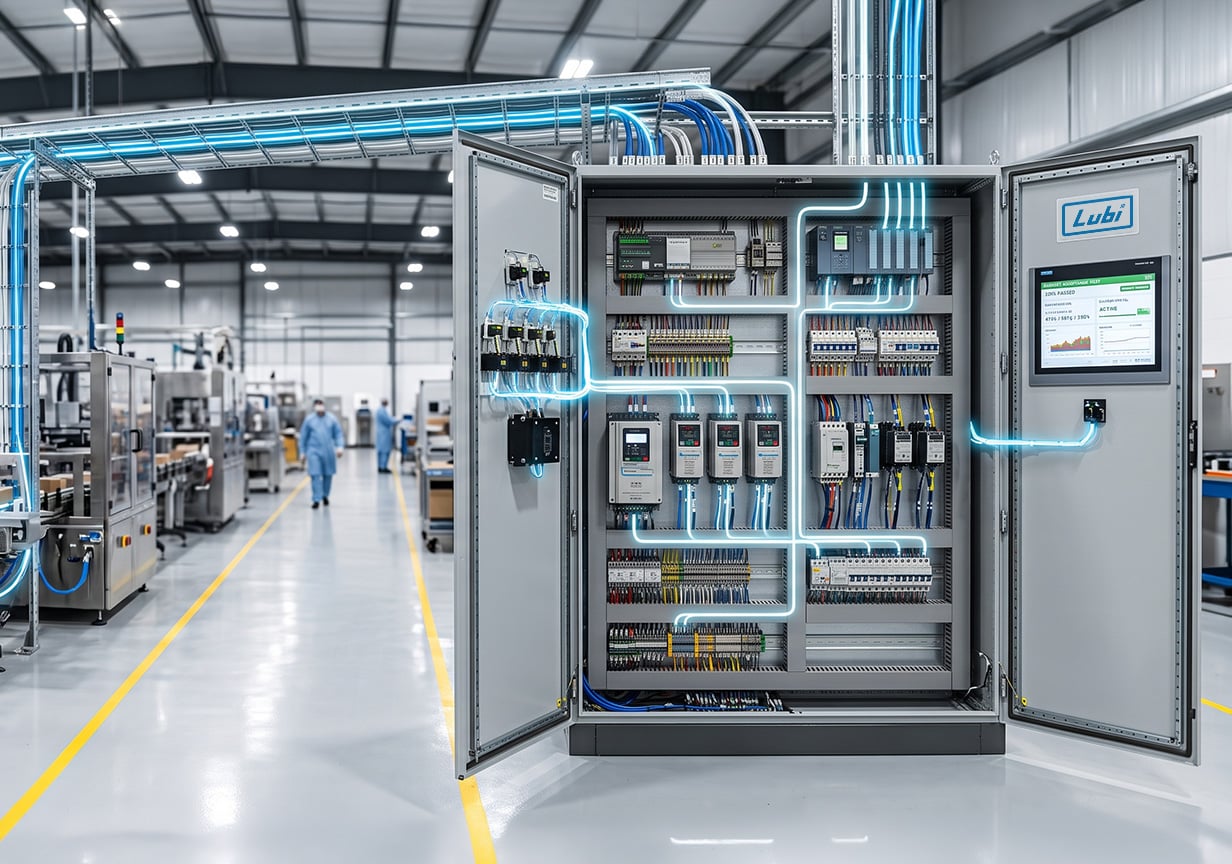
Discover how manufacturers can bridge operational silos by moving from isolated machine automation to connected smart factory orchestration. Learn how integrating legacy systems with IT/OT, MES, and analytics boosts OEE and reduces downtime without replacing existing machinery.
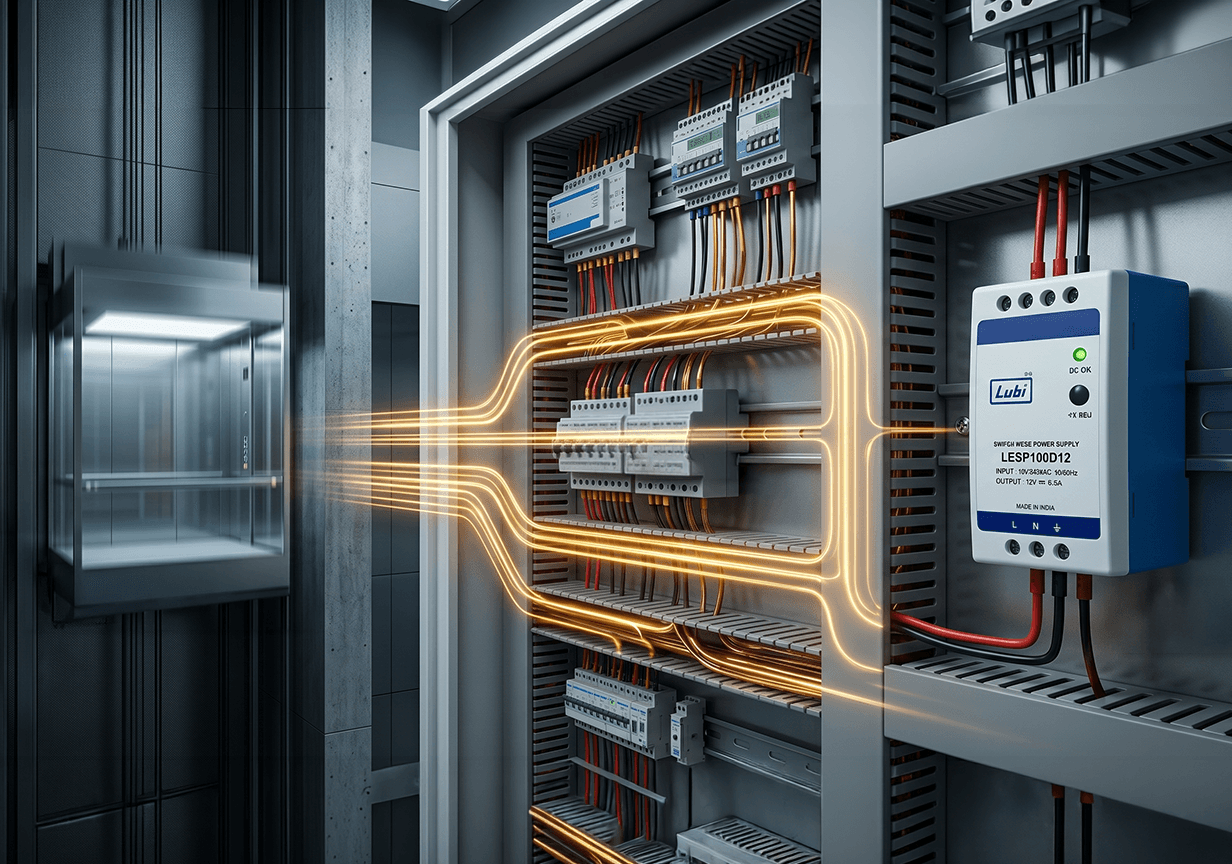
Ensure smooth and safe elevator operations with Lubi SMPS. Discover how these highly reliable switched-mode power supplies deliver the stable, uninterrupted performance your elevator systems demand.