

Loading...
Loading...
Loading...
 Lubi Solar


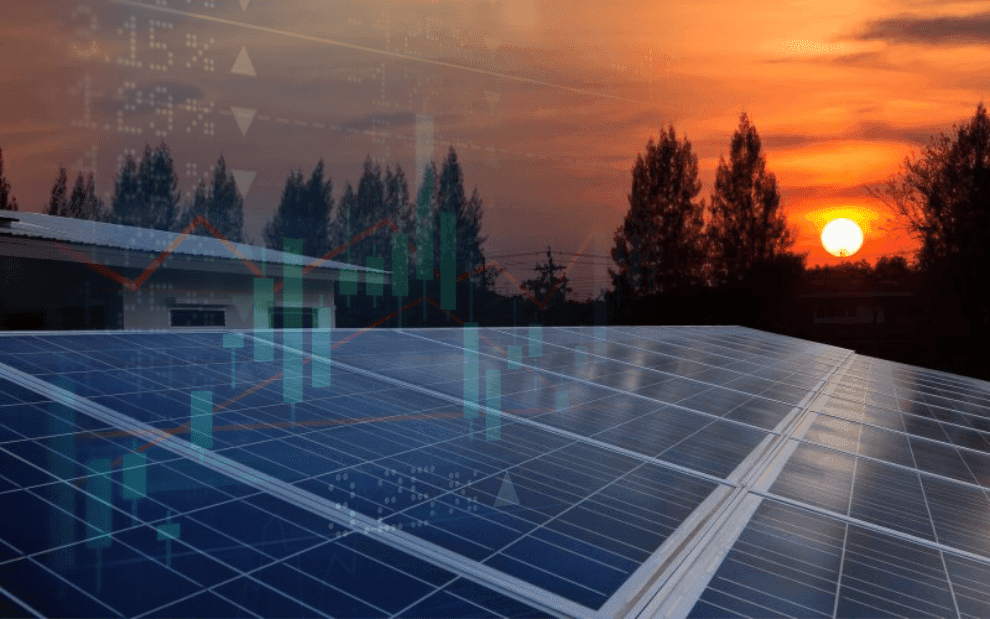
While looking to purchase renewable power, the biggest challenge companies face is financing. Solar power plants need high upfront expenditure, which in the absence of government incentives and subsidies may deter interest from those who may find the process expensive and time-consuming. Large industrial units face the prospect of fulfilling their renewable energy obligations or be penalized with heft energy bills or sanctions. In this blog, we will discuss about the options available for investing in solar power in India.
The investment options available can be broadly classified as:
Both CapEx and OpEx models need to be considered while evaluating the financial viability and long-term profitability of a solar power plant.The decision depends on various factors specific to a company's objectives and financial considerations. Let's explore the characteristics and benefits of each model to help you make an informed decision.
Capital Expenditure or CapEx refers to the initial investment required to establish the solar power plant. It includes the costs associated with acquiring and installing the necessary equipment, such as solar panels, inverters, mounting structures, electrical infrastructure, and other components. CapEx also covers the expenses related to land acquisition, engineering, procurement, construction, and commissioning of the plant. Essentially, CapEx represents the upfront capital investment required for the infrastructure and assets of the solar power plant.
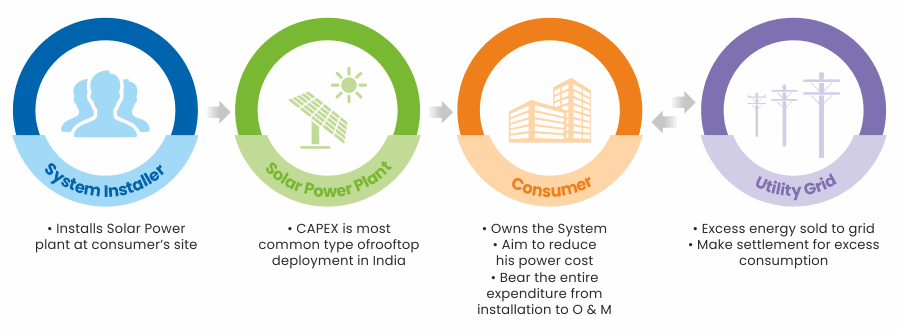
In a CapEx model, the company invests in acquiring assets or infrastructure upfront, which are expected to provide long-term value. Once the plant is operational, the owner assumes responsibility for its maintenance and operational costs. The revenue generated from the sale of electricity produced by the plant is taken by the owner of the plant.
In this model, the owner has full control over the plant and takes ownership of the financial rewards as well as risks associated with the solar plant.
Operational Expenditure or OpEx refers to the ongoing operational expenses involved in running and maintaining the solar power plant throughout its operational lifetime. It includes costs related to regular operations, such as labor wages, maintenance and repairs, monitoring systems, insurance, taxes, administrative expenses, and other day-to-day operational costs. OpEx is typically incurred on an annual basis and represents the expenses required to ensure the smooth functioning and performance of the solar power plant.
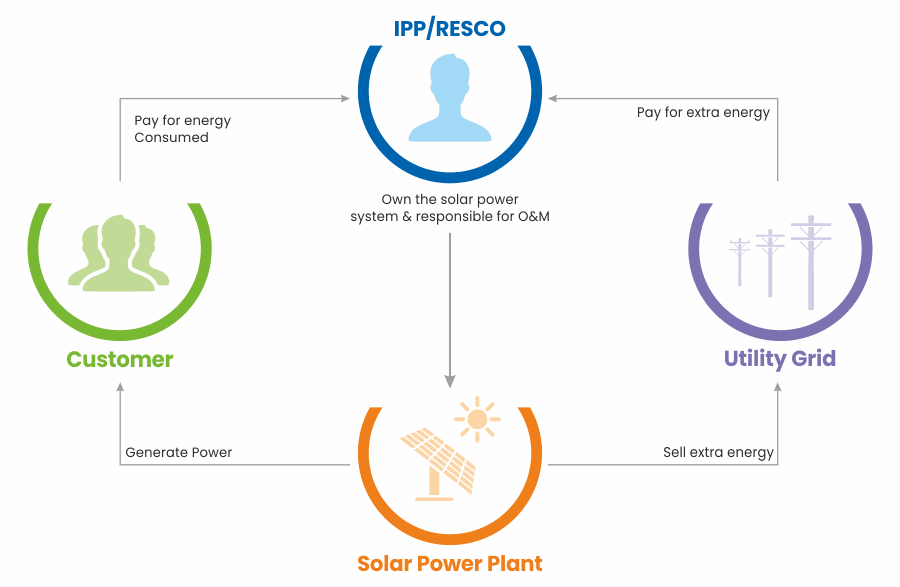
In an OpEx model, the company enters into a contract or agreement with a solar provider who owns and operates the plant, rather than making significant upfront investments. The emphasis is on outsourcing the development, operation and maintenance of the solar to an Independent Power Producer (IPP). The IPP enters into a power purchase agreement (PPA) with the owner of a commercial or industrial entity, agreeing to purchase the electricity at an agreed-upon rate. The power purchaser thereby benefits from predictable electricity costs.
As we can see both the models have their advantages and disadvantages. The CapEx model provides direct control and potential long-term gains for the owner, while the OpEx model offers hassle-free approach with reduced upfront costs and predictable prices. The choice between the two models depends on the factors such as power purchasers financial capabilities, appetite for risk, operational expertise and long-term objectives.
LUBI Electronics is a leading company in India, exhibiting expertise in the automation, solar, and control panel industry.
Our solar offerings include best-in-class solar modules, solar pumps, solar pump controllers and solar inverters.
For more information on our offerings, please reach out to us at lubi@lubielectronics.com.
In this world, where the cost of energy is increasing by the day, it is wise to switch to alternative energy sources that promise you huge savings and potentially make your life super easy.
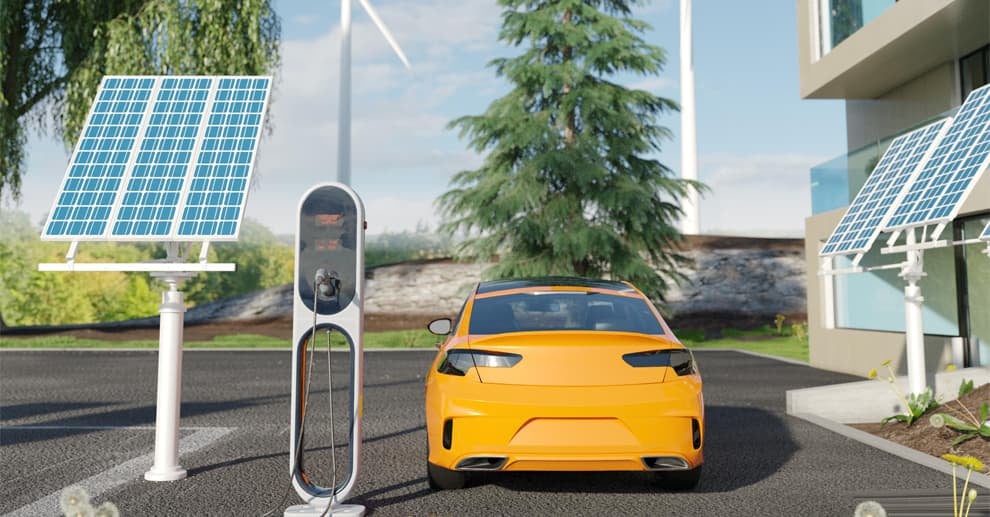
When we say “EV,” the first thing that comes to your mind is, obviously, “Electric Vehicle.” Electric vehicle (EV) is an emerging and revolutionary industry that improves fuel economy, lowers fuel costs, and reduces emissions.
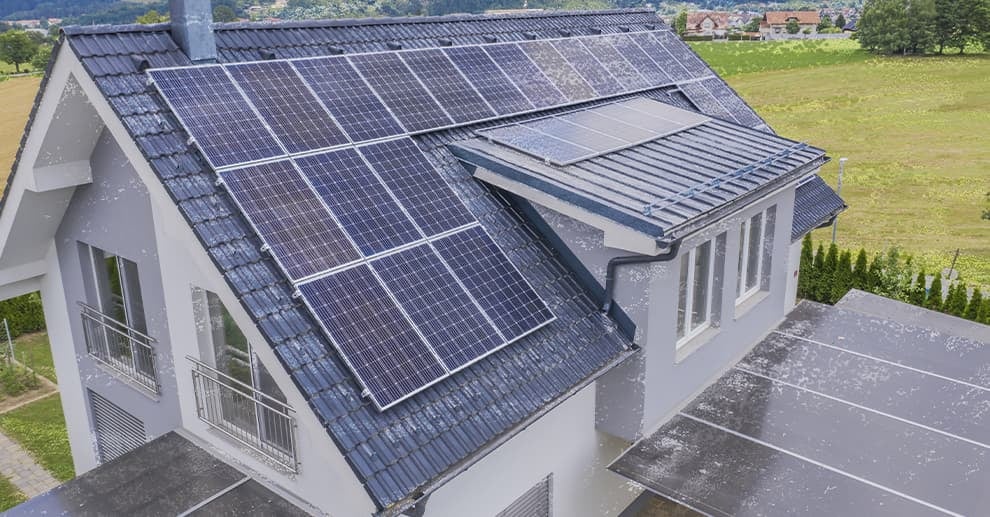
With the increasing petrol and electricity prices, millennials are moving towards green, renewable sources such as electric vehicles, wind energy, solar energy, and many other available options.