
Loading...
Loading...
Loading...


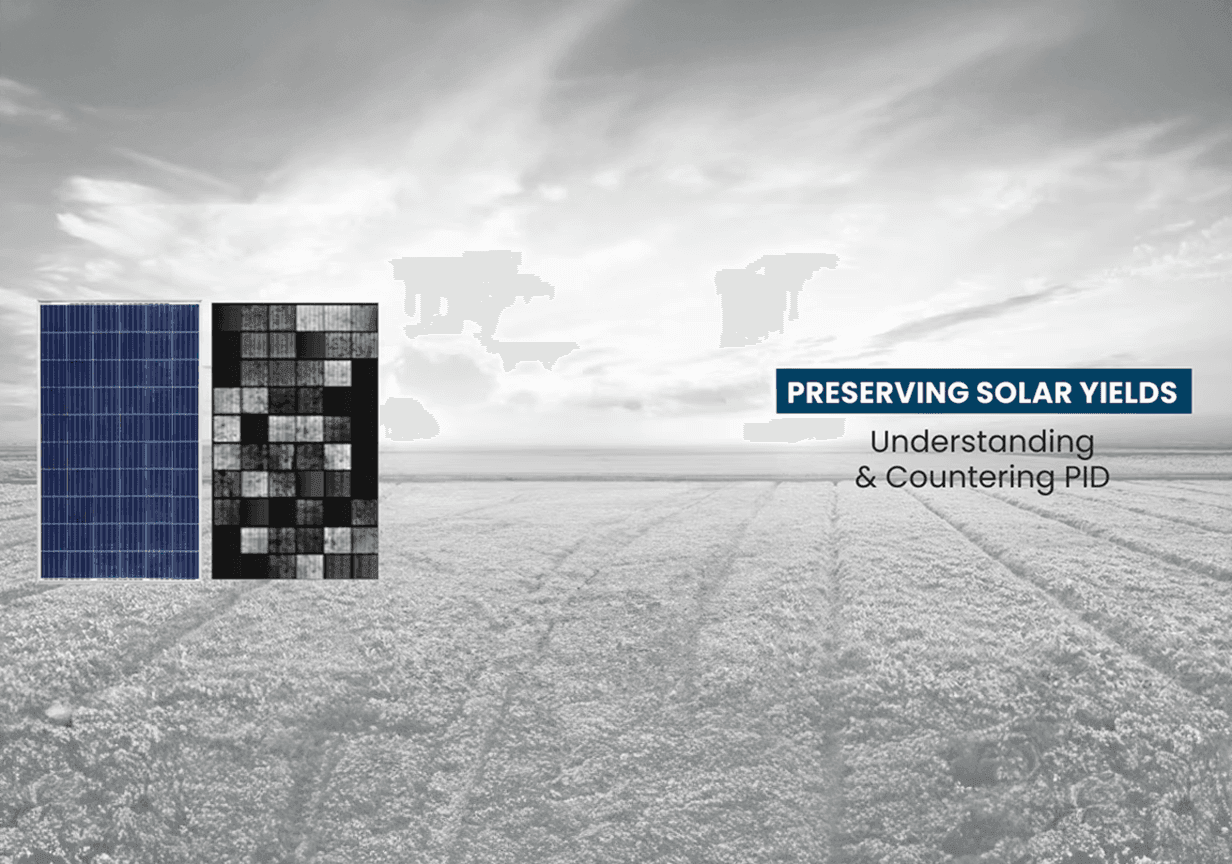
Solar energy has long been hailed as a clean and sustainable alternative to conventional power sources. The widespread adoption of solar photovoltaic (PV) technology has significantly contributed to reducing carbon footprints. However, amidst the success stories, a silent threat called "Potential Induced Degradation" (PID) is impacting solar energy yields. In this blog post, we delve into what PID is, its causes, and potential solutions to mitigate its effects.
PID is a phenomenon that can cause a significant drop in the efficiency of solar panels over time. It occurs when a voltage potential exists between the solar cells and the grounded frame of the PV module. This potential difference can lead to the flow of electric current, resulting in the degradation of the solar panel and hence impacts performance.
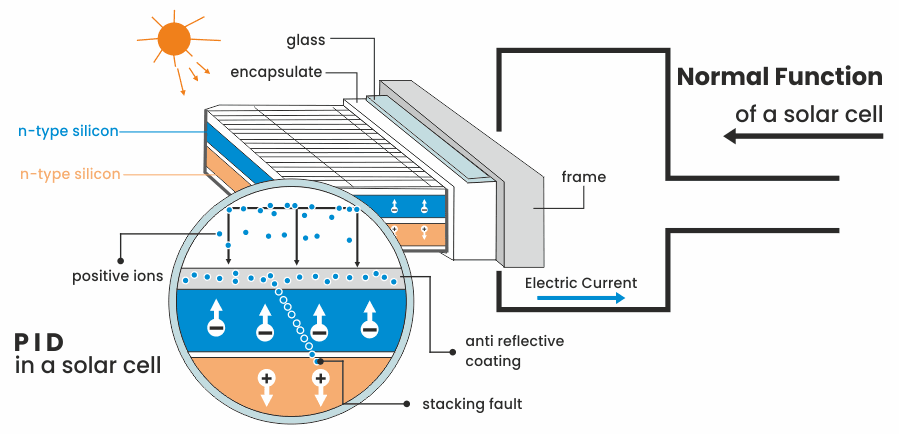
Electric current generated in a solar cell moves through well-defined paths called busbars and cell fingers. The electric current generated at the cell level follows designated paths before reaching the inverter. But sometimes, due to stray potentials, the charged electrons move towards the ground through the encapsulant and frame of the solar panel. This phenomenon degrades the solar efficiency and is called Potential Induced Degradation.
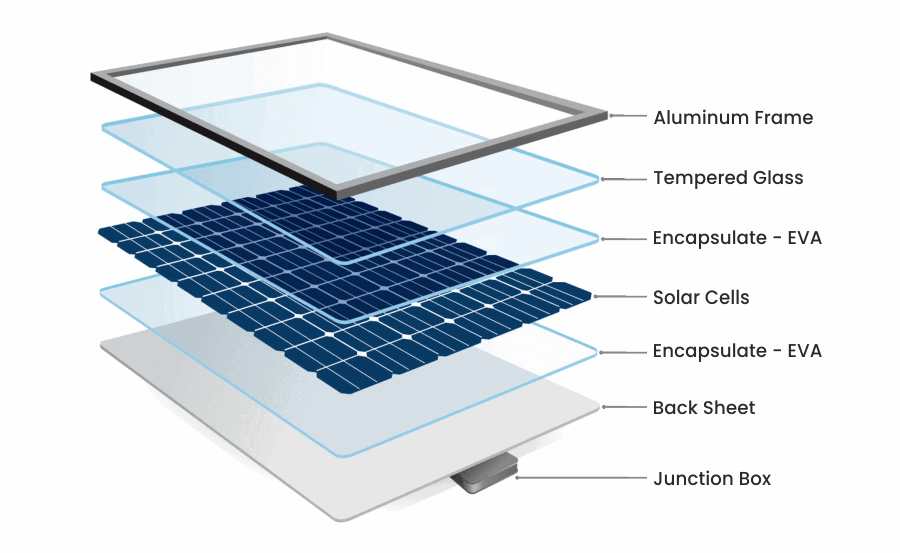
PID is a complex phenomenon involving multiple factors affecting the solar panel. However, the overall effect on the solar panels is fairly simple; that is reduction in the yield of the solar panels.
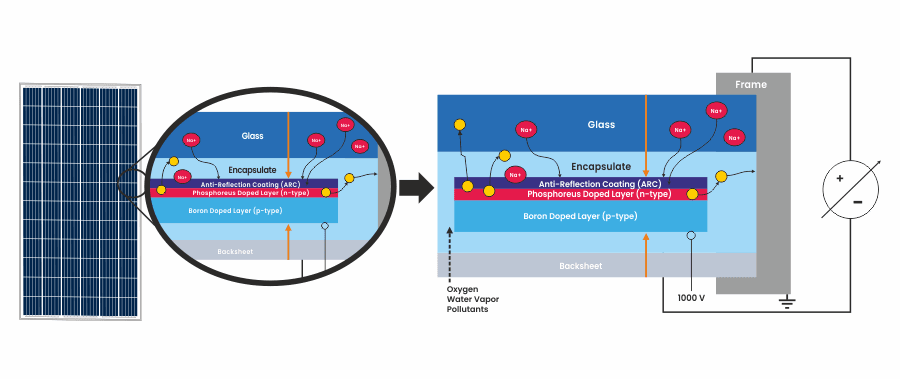
A solar system consists of multiple panels connected in an array called a string. Compared with the ground, the voltage has both negative and positive potential. It is the negative potential that triggers PID in a solar cell, attracting positive ions in the cell, such as sodium ions stimulating surface polarization and shunting. This movement happens typically from the glass plate through the encapsulation and anti-reflective coating to reach the cell. Subsequently, electron flow comes to a halt, giving rise to electricity generation. This leads to disturbances in junction functionality, causing a decrease in the yield of the solar panel.
PID basically affects the Voc and fill factor of the solar module, which can lead to a reduction in the output to about 30% of the rated output. With the passage of time, the losses accentuate and may reach as high as 90% of rated output.
Preserving solar yields and ensuring the long-term efficiency of PV systems requires a comprehensive understanding of potential-induced degradation. By addressing the causes of PID and implementing proactive measures, such as investing in high-quality solar panels, employing sound system designs and implementing regular monitoring and maintenance, the solar industry can safeguard investments and ensure reliable clean energy for the future. As the demand for solar energy continues to grow, combating PID becomes paramount in achieving full potential of solar energy.
LUBI Electronics is a leading company in India, exhibiting expertise in the automation, solar, and control panel industry.
Our solar offerings include best-in-class solar modules, solar pumps, solar pump controllers and solar inverters.
For more information on our offerings, please reach out to us at lubi@lubielectronics.com.
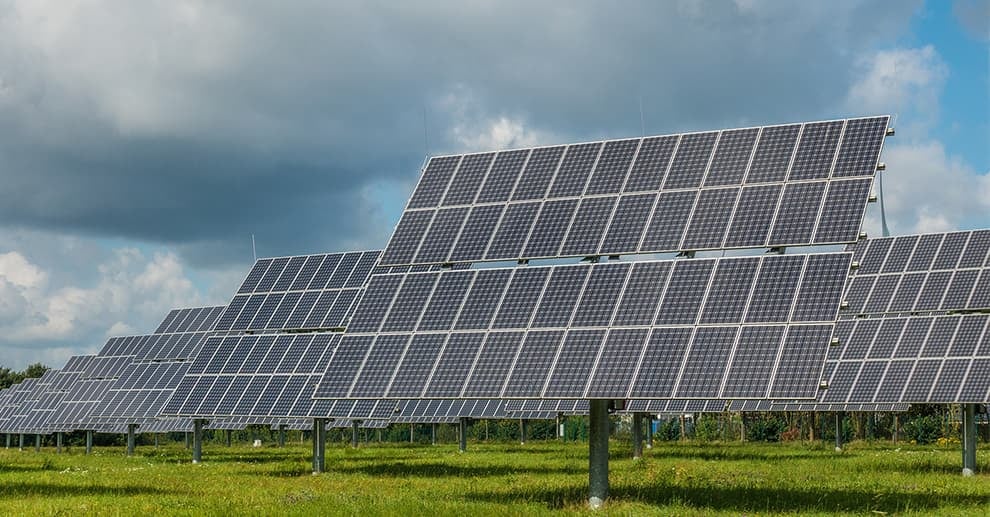
In this world, where the cost of energy is increasing by the day, it is wise to switch to alternative energy sources that promise you huge savings and potentially make your life super easy.
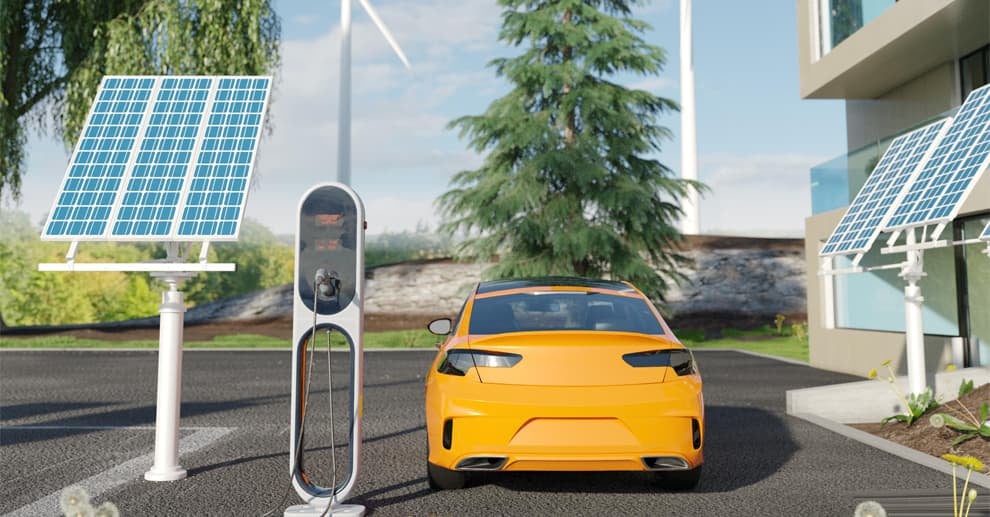
When we say “EV,” the first thing that comes to your mind is, obviously, “Electric Vehicle.” Electric vehicle (EV) is an emerging and revolutionary industry that improves fuel economy, lowers fuel costs, and reduces emissions.
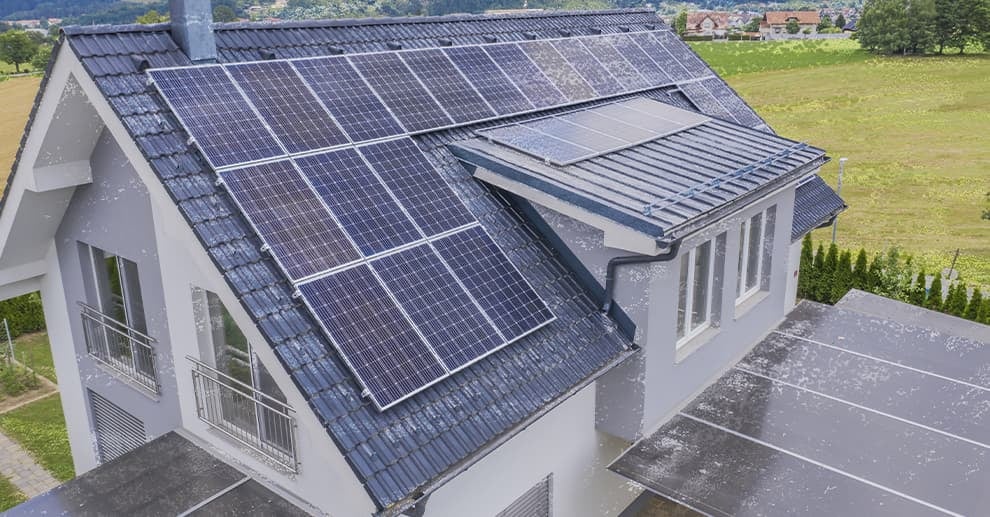
With the increasing petrol and electricity prices, millennials are moving towards green, renewable sources such as electric vehicles, wind energy, solar energy, and many other available options.